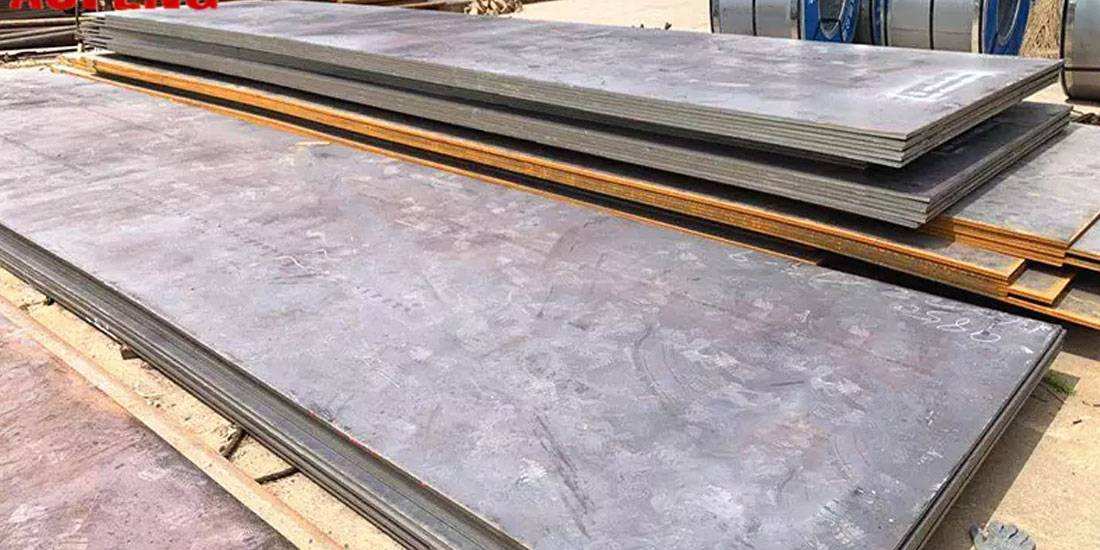
What are S550MC Steel Plates
Standard Specification for S550MC Steel Plates
Equivalent Grades of S550MC Steel Plates
Chemical Composition of S550MC Steel Plates
Mechanical Properties of S550MC Steel Plates
Advantages of S550MC High-Tensile Steel Plates
Manufacturing Process of S550MC Steel Plates
Why Use S550MC Instead of Conventional Structural Steel
S550MC plates are high-strength structural steel sheets rolled using a thermomechanical process defined under EN 10149-2. The grade carries a minimum yield strength of 550 MPa and a tensile strength between 600 and 760 MPa, so fabricators get more strength per kilogram compared with standard mild steel. Weldability holds up well too, as carbon content remains at or below 0.12%. Forming operations benefit from workable elongation values even at higher thickness. S550MC plates see regular use in crane booms, earthmoving buckets, lifting frames and mobile machinery, where every kilogram saved adds to payload capacity. Triton Alloys Inc. is a leading producer and supplier of S550MC Steel Plates for structural or vehicle frameworks and will find chemical composition, mechanical properties, and standard sizes for S550MC High-Tensile Steel Plates listed below.
What are S550MC Steel Plates?
S550MC falls under EN 10149-2, the standard covering high-yield-strength flat products made by thermomechanical rolling for cold forming applications. Thermomechanical rolling, shortened to TMCP, pairs controlled rolling temperatures with accelerated cooling straight after the final pass. This locks in a fine-grain structure without a separate heat-treatment step. The grade holds a minimum yield strength of 550 MPa, a tensile strength of 600 to 760 MPa, and an elongation of 14% for thickness from 3 mm upward. Conventional structural steel reaches comparable strength through heavier sections or added alloying. S550MC gets there through grain refinement instead, keeping the plate thinner for the same load rating.
S550MC High Tensile Steel Plates: Product Overview
Triton Alloys stocks S550MC in thickness from 2.4 mm to 16 mm, width from 900 mm to 1850 mm, and length up to 12000 mm, supplied hot rolled with a mill finish. Edges come as mill edges or slit edges depending on order size. Plates ship in coil or cut-length form, and processing includes cutting, drilling, grinding, and forming to drawing. The manufacturing process complies with EN 10149-2, and chemistry and mechanical values are confirmed to WNR 1.0986. The high-tensile steel plates range also covers other related grades such as S355MC and S500MC for projects that need a lower or intermediate strength grade, and also S550MC.
EQUIVALENT GRADE OF S550MC Plate
| S550MC EN 10149-2 Number:1.0986 | Comparison of steel grades | |
| SEW092 | QStE 550TM | |
| NFA36-231 | E560D | |
| UNI8890 | FeE560TM | |
| ASTM | 080XLK | |
| BS1449 | 60F45/60F55 | |
Specification
| Item | High Tensile Steel Plate - EN 10149-2 / WNR. 1.0986 |
|---|---|
| Standard | ASTM, ASME and API |
| Size | 0.5 mm – 200 mm |
| Thickness range | 2.4mm-16mm |
| Width range | 900mm-1850mm |
| Length | 2000mm to 12000mm |
| Process of Manufacturing | Hot-Rolled (HR) |
| Hardness | Soft, Hard, Half Hard, Quarter Hard, Spring Hard etc. |
Chemical Composition Of S550MC Plate
| Grade | C max | Si max | Mn max | P max | S max | AL max | Nb max | V max | Ti max |
| S550MC | 0.12 | 0.50 | 1.8 | 0.025 | 0.015 | 0.015 | 0.09 | 0.2 | 0.15 |
Mechanical Properties Of S550MC Plate
| Grade | ReH-Minimun yield strength(Mpa) | Rm-Tensile strength(Mpa) | Nominal thickness(mm) | A-Minimum elongation Lo=5,65√So(%) | Nominal thickness(mm) | A-Minimum elongation Lo=Lo=80mm(%) |
| EN 10149-2 S550MC | 550 | 600-760 | From3 | 14 | to3 | 12 |
Advantages of Choosing S550MC High-Tensile Steel Plates
Choosing S550MC over conventional grades changes fabrication economics in several practical ways, from cutting costs to service life.
Lower fabrication costs
Thinner sections mean less material to cut, bevel, and weld. Cycle times on cutting stations drop, and weld consumable use falls in proportion to the reduced plate thickness needed for the same strength.
Reduced steel consumption
A structure designed in S550MC uses less tonnage than one built in S355 for the same load case. That translates into fewer raw material purchases and lower freight weight per finished unit.
Easier transportation
Lighter fabricated sections mean fewer axle weight restrictions on delivery trucks. Oversized structural components that would need special permits in mild steel sometimes clear standard road transport limits in S550MC.
Longer service life
Higher yield strength reduces the risk of permanent deformation under repeated loading. Components see less fatigue damage over their working life compared with lower-grade steel carrying the same load.
Improved payload capacity
Mobile equipment such as crane booms and tipper bodies gains payload headroom when the structure itself weighs less. The saved tonnage in the chassis or frame converts directly into extra carrying capacity.
Lower maintenance
Fewer stress concentrations and reduced cracking risk under cyclic load mean less time spent on inspection and repair welding across the equipment's service interval.
Manufacturing Process of S550MC Steel Plates
Producing S550MC to EN 10149-2 tolerances involves several controlled stages, each affecting the final grain structure and mechanical result.
Refining the melt to the low carbon, phosphorus, and sulfur requirements of the grade is the first step in steelmaking and is done using a basic oxygen or electric arc furnace. Molten steel is then cast continuously into slabs, and the segregation remains low.
Followed by thermomechanical rolling. The slab is reheated, then rolled through the stages, with the final passes at a temperature lower than the conventional hot rolling temperature. This is what makes TMCP steel have a fine-grain structure. The cooling process is initiated immediately after the final pass and carried out by means of water sprays at the specified cooling rate.
Further heat treatment is generally not required because the TMCP route already provides the desired strength and toughness. Check surface condition, flatness, and dimensional accuracy. Testing closes the loop with tensile properties, hardness, and chemical composition on sample coupons before dispatch.
Why Use S550MC Instead of Conventional Structural Steel?
S550MC delivers a higher strength-to-weight ratio than conventional structural steel grades, which directly affects fabrication cost, payload capacity, and overall design efficiency. The table below breaks down how it compares against typical structural steel across the factors that matter most in engineering decisions.
| Comparison Factor | S550MC | Conventional Structural Steel |
|---|---|---|
| Higher yield strength | Minimum yield strength is 550 MPa, giving much higher load-carrying capacity in thinner sections. | Typical structural grades like S355, S420, and S460 offer lower yield strength, so thicker sections are often needed for the same load. |
| Weight reduction | Because of the higher strength, designers can often reduce thickness and overall steel mass while still meeting performance targets. | Lower-strength grades generally require more material, which increases component weight. |
| Better payload | Lower tare weight in vehicles, trailers, cranes, and transport equipment can translate into higher payload capacity or more useful design space. | Heavier structures reduce available payload or force a larger/lower-efficiency design. |
| Improved fabrication efficiency | S550MC is designed for cold forming, with good weldability and good bending/flanging performance for its strength level. | Conventional structural steel is easy to fabricate too, but higher section thickness can increase cutting, forming, welding volume, and handling effort. |
Testing & Quality Assurance
Every batch of S550MC goes through mechanical testing for yield strength, tensile strength, and elongation, alongside chemical testing to confirm the melt sits within the carbon, manganese, and micro-alloy limits set by EN 10149-2. Third-party inspection is available on request. We provide documentation, such as a test certificate, issued under EN 10204 3.1 or 3.2 depending on order requirements, and dimensional inspection records certifying thickness, width, length, and flatness against the purchase order before the plates leave the warehouse.
Why Choose Triton Alloys for S550MC Steel Plates?
Triton Alloys Inc. supplies and stocks S550MC high-tensile plates and maintains ready stock across common thickness and width combinations to meet most orders without waiting for new mill production, and provides custom size options on request. Prices remain competitive compared to other stock of similar EN 10149-2 in the region. Export documentation is handled in-house for all locations, and pre-loading inspection can be arranged in-house or through a third party. Technical support includes advice on grade selection, certification questions, and processing support for teams using S550MC for the first time.
Frequently Asked Questions
S550MC is a thermomechanically rolled structural steel under EN 10149-2, carrying a minimum yield strength of 550 MPa. It is used where high strength and low weight are required, such as crane booms and lifting equipment.
Yes, the low carbon content of 0.12% max keeps weldability good using standard welding methods. Preheat and heat input still need control to preserve the TMCP grain structure near the weld zone.
Yes. Cold forming works within the bend radius limits set for the thickness and direction of rolling. The grade has elongation values of about 14% or 12%, according to the thickness, so it can be bent without cracking, respecting the radii.
EN 10149-2 covers S550MC, specifying the chemical composition, mechanical properties, and delivery conditions of thermomechanically rolled high-yield-strength steels for cold forming.
Yes, in many load-bearing applications. A thinner S550MC section can achieve the same load rating as the S355 plate, reducing weight while meeting the same structural requirement, but the design must be rechecked on a case-by-case basis.
We Offers Following Processing for S550MC High Tensile Plates


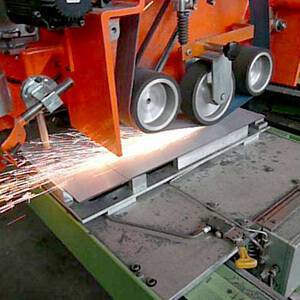

Cutting
Forming Drilling / Machining
Grinding
Testing
Price List of S550MC High Tensile Steel Plates
S550MC High Tensile Structural Steel Plate
US $800-3000 / Metric Ton( FOB Price)
S550MC Hot Rolled steel Plates
US $605-629 / Metric Ton( FOB Price)
S550MC EN 10149-2 Plates
US $800-4000 / Metric Ton( FOB Price)
S550MC Alloy Steel Plates
US $500-800 / Metric Ton( FOB Price)
S550MC (1.0986) Steel Plates
US $560-670 / Ton( FOB Price)
EN 10025-2 S550MC Plates
US $540-900 / Ton( FOB Price)
EN 10149-2 S550MC Steel Plates
US $510-900 / Ton( FOB Price)
Applications of S550MC High Tensile Steel Plates



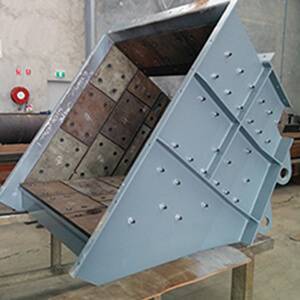


Machine building
Pylons and other architectural structures
Lifting and mobile equipment
Construction of bridges
Wearing plates
Framework structures
Crane booms
Rail cars
Stone or iron chutes
Truck frames
Containers
Vehicles and transport equipment
Steel constructions
Anti drill plates such as security doors, shot blasting equipment and tumbling machine

Specialized Products

Our Products